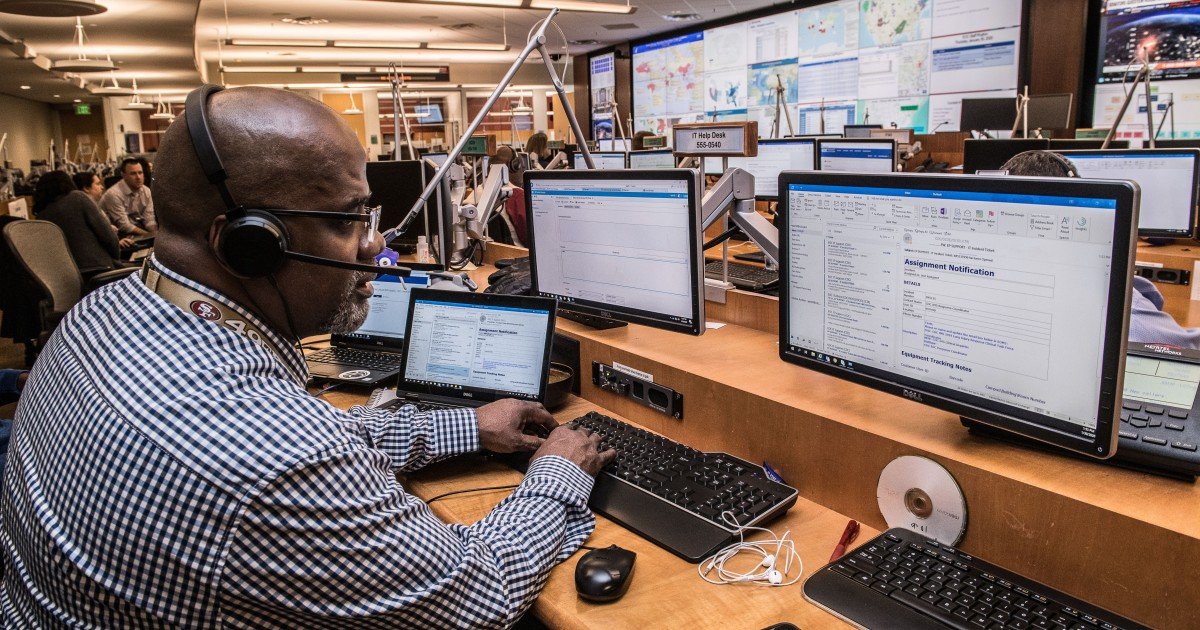
You can send a message at midnight, stream a video before sunrise, upload a file during a holiday, or open a website in the middle of the night and expect it to work. There is rarely a moment when you stop to wonder what makes that possible. So, how do data centers keep the internet running 24/7? The answer involves a carefully engineered combination of servers, networking equipment, redundant power, cooling systems, backup infrastructure, cybersecurity, physical security, monitoring, automation, and geographically distributed facilities.
The internet is not powered by one giant computer or a single central building. It is an enormous network of interconnected systems spread across cities and countries. Data centers provide much of the physical infrastructure behind the online services people use every day.
When you open a website, access cloud storage, stream content, use an online application, or communicate through a digital platform, computers somewhere have to receive your request, process information, retrieve data, and send a response back.
And they have to keep doing it continuously.
That requirement is what makes data center engineering so fascinating. The goal is not simply to make computers work. The goal is to make thousands or millions of connected systems remain available even when individual components fail, demand suddenly rises, temperatures change, or unexpected problems occur.
What Is a Data Center?
A data center is a facility designed to house computing, storage, networking, power, cooling, and security infrastructure.
At its simplest, you can think of it as a highly specialized environment for running computers continuously.
Inside a modern data center, you may find:
- Servers
- Storage systems
- Network switches
- Routers
- Firewalls
- Load balancers
- Power distribution equipment
- Batteries
- Backup generators
- Cooling systems
- Monitoring equipment
- Physical security systems
These components work together to provide digital services.
A data center may support websites, cloud applications, databases, online games, financial systems, enterprise software, streaming platforms, artificial intelligence workloads, backups, and many other services.
Data Centers Are More Than Rooms Full of Servers
A common mental picture of a data center is a large room filled with blinking computers.
That picture is not completely wrong, but it misses the most important part.
The real challenge is keeping those computers available, connected, powered, cooled, secured, and monitored continuously.
A server that works perfectly but loses power is not useful.
A server with electricity but no network connection cannot serve users.
A powerful computer that overheats may shut down.
A healthy application with a failed database may become unavailable.
This is why data center reliability depends on the entire environment rather than the server alone.
What Happens Inside a Data Center?
When you access an online service, your request can travel through multiple networks before reaching the infrastructure responsible for handling it.
Once the request arrives at the appropriate data center or edge location, several things can happen.
A network device receives the traffic.
A load balancer may determine which application server should handle the request.
The application may need to communicate with a database.
The database may retrieve information from storage.
The application processes the information.
The resulting response is sent back through the network.
From the user’s perspective, this may feel like one action.
Behind the scenes, several interconnected systems can be involved.
If you want a broader explanation of what happens between your device and an online destination, you can also explore this guide on how the internet actually works from your device to a website.
Understanding that journey makes it easier to appreciate why data center reliability matters so much.
Why Data Centers Need to Operate 24/7
Internet users do not follow a traditional nine-to-five schedule.
Someone may access an application at 3 a.m. while another person is using the same service on the other side of the world during their daytime.
Online services therefore need infrastructure that can operate continuously.
For organizations, downtime can interrupt:
- Customer access
- Online transactions
- Internal operations
- Communication
- Data processing
- Cloud applications
- Websites
- Automated systems
That is why data centers are designed around a simple but demanding principle:
Individual components can fail, but the overall service should continue whenever possible.
This philosophy is called redundancy.
How Redundancy Keeps Services Available
Redundancy is one of the most important ideas in data center design.
Instead of depending on one component, engineers can provide multiple components capable of performing the same or related functions.
Imagine an application running on only one server.
If that server fails, the application may stop working.
Now imagine the same application running across several servers.
If one server fails, the remaining servers may continue serving users.
This is the basic idea behind redundant infrastructure.
Redundant Servers
Applications can run across multiple machines.
Traffic can be distributed between them.
If one machine becomes unavailable, systems can redirect traffic toward healthy instances.
Redundant Network Connections
A data center may have multiple network paths.
If one connection experiences a problem, traffic may potentially use another path.
Redundant Storage
Important information can be stored using architectures designed to tolerate hardware failures.
The exact approach depends on the storage technology and service requirements.
Redundant Power
Power systems are often designed with multiple layers of protection so that a single electrical problem does not necessarily shut down the entire facility.
Redundancy is not about making failure impossible.
It is about making individual failures less likely to become service-wide failures.
How Backup Power Works
Electricity is one of the most fundamental requirements of a data center.
Servers, networking equipment, cooling systems, security equipment, and monitoring systems all depend on power.
A normal electrical supply can experience interruptions.
That is why critical facilities use backup power systems.
Uninterruptible Power Supply Systems
A UPS can provide temporary power when the primary electrical supply is interrupted.
Its purpose is not necessarily to keep the facility operating indefinitely.
Instead, it can bridge the gap between a power failure and the activation of longer-term backup systems.
This transition can happen extremely quickly.
Backup Generators
Generators can provide longer-duration backup power.
If the external electricity supply is interrupted, generators can be started to support critical infrastructure.
Large facilities may have multiple generators and carefully designed fuel and distribution systems.
Multiple Power Paths
Data center power architecture can include multiple distribution paths so that maintenance or failure in one part of the electrical system does not automatically bring everything down.
This is another example of designing around failure.
How Data Centers Prevent Overheating
Computers generate heat.
A server processing data continuously can produce significant amounts of heat, especially when large numbers of servers operate together.
If that heat is not removed effectively, equipment can become less efficient or fail.
Cooling is therefore not a luxury in a data center.
It is a core part of the infrastructure.
Air-Based Cooling
Traditional data centers commonly use carefully managed airflow.
Cool air is delivered toward equipment while hot air is removed.
Server racks can be arranged to improve airflow efficiency.
One common approach is to organize equipment around hot and cold aisles so that the movement of warm and cool air can be controlled more effectively.
Liquid Cooling
As computing becomes more powerful, especially for AI and high-performance workloads, liquid cooling is becoming increasingly important in certain environments.
Liquid can transfer heat more efficiently than air in some high-density configurations.
Different systems use different approaches, including direct-to-chip cooling and other specialized designs.
The important point is that data center cooling continues to evolve as computing hardware becomes more powerful.
Why Temperature Monitoring Matters
Cooling systems are continuously monitored.
Sensors can track conditions such as:
- Temperature
- Humidity
- Airflow
- Equipment conditions
- Cooling-system performance
If temperatures begin moving outside expected ranges, automated systems and operations teams can respond.
How Networking Keeps Data Moving
A data center without networking would simply be a collection of isolated computers.
Networking connects servers to users and allows internal systems to communicate.
Important networking components can include:
- Switches
- Routers
- Firewalls
- Load balancers
- Network interfaces
- Fiber connections
- Traffic management systems
When you request a web page, application, or online service, network infrastructure determines how information travels between systems.
Load Balancing
A load balancer can distribute incoming requests across multiple servers.
Suppose thousands of people are accessing the same application.
Instead of sending every request to one machine, the load balancer can distribute traffic across multiple healthy application instances.
This helps prevent individual servers from becoming overwhelmed.
Network Redundancy
Data centers can also use multiple network connections and paths.
If one path becomes unavailable, another can potentially carry the traffic.
This is especially important for services where even a short interruption can affect a large number of users.
How Data Centers Handle Huge Traffic Spikes
Internet demand is not constant.
A service may normally receive moderate traffic and then suddenly experience a massive increase.
This can happen when:
- A popular event begins
- A product becomes highly popular
- A major news story spreads
- A new application launches
- A video goes viral
- Millions of users access a service simultaneously
Data center architecture needs to account for these changes.
Horizontal Scaling
One strategy is to add more application instances.
Instead of making one server endlessly more powerful, organizations can distribute work across many servers.
Auto Scaling
Cloud and distributed systems can automatically add or remove computing resources based on demand.
When demand increases, additional resources may be started.
When demand decreases, unnecessary resources can be removed.
This helps infrastructure respond dynamically instead of being permanently sized for the highest possible traffic.
The Role of Cloud Computing
Modern cloud computing depends heavily on data centers.
Cloud providers operate large facilities containing computing, networking, and storage resources that customers can access remotely.
The cloud does not eliminate physical infrastructure.
It changes how that infrastructure is allocated and consumed.
Instead of a company purchasing a physical server and managing every part of it, it can provision virtual computing resources through software.
Virtualization allows physical machines to host multiple isolated environments.
Containers can provide another layer of application packaging and deployment.
Automation can create, configure, monitor, and remove resources rapidly.
This software-driven approach makes data center infrastructure much more flexible.
If you want to understand the broader computing processes that happen when software starts running, you can read this explanation of what happens inside a computer when you open an application.
The cloud and the data center are closely connected concepts, but they are not identical. The data center is physical infrastructure; cloud computing is a way of delivering and managing computing resources.
How Storage Systems Protect Your Data
Data is one of the most valuable resources handled by modern online infrastructure.
Photos, documents, databases, application records, backups, and other information need to be stored reliably.
A good storage architecture assumes that hardware can fail.
Hard drives and solid-state drives can develop problems.
Controllers can fail.
Servers can become unavailable.
Entire infrastructure components can require maintenance.
For that reason, storage systems can use redundancy, replication, distributed architectures, and backup strategies.
Replication
Replication means maintaining copies of information in different locations or systems.
If one copy becomes unavailable, another copy may still be accessible.
The exact design depends on the application’s requirements.
Some systems prioritize consistency.
Others prioritize availability and resilience.
There is no single storage architecture that is ideal for every workload.
How Data Centers Handle Hardware Failures
Failure is not an unusual event in large computing environments.
When thousands of physical components operate continuously, individual failures are expected.
The goal is to make those failures manageable.
Monitoring systems can detect:
- Failed disks
- Unresponsive servers
- Network problems
- Abnormal temperatures
- Power issues
- Application errors
- Hardware degradation
Automated systems may respond by restarting workloads, moving traffic, replacing failed components, or notifying technical teams.
This approach allows operations teams to focus on larger problems instead of manually checking every machine every minute.
Predictive Maintenance
Modern infrastructure can also use telemetry and analytics to identify patterns that may indicate an approaching failure.
For example, unusual temperatures, error rates, or hardware behavior may provide warning signals.
Predictive approaches cannot eliminate failures, but they can help organizations respond before a small issue becomes a larger disruption.
How Physical Security Protects Data Centers
Cybersecurity receives much of the attention in discussions about online infrastructure, but physical security is equally important.
Data centers can use multiple layers of physical protection.
These may include:
- Controlled entry points
- Security personnel
- Identification systems
- Surveillance
- Restricted server areas
- Visitor management
- Environmental monitoring
The objective is to prevent unauthorized individuals from physically accessing equipment.
Physical access to a server can potentially create serious security risks.
That is why large facilities treat the physical environment as part of the overall security architecture.
How Cybersecurity Helps Keep Services Online
Keeping the internet running is not just about preventing hardware failure.
Systems also need protection from malicious activity.
Data centers can use multiple security technologies and practices, including:
- Firewalls
- Network segmentation
- Intrusion detection
- Access controls
- Encryption
- Authentication
- Security monitoring
- Vulnerability management
- Automated threat detection
Security teams may monitor systems continuously for unusual behavior.
The objective is to identify and contain threats before they affect critical services.
Security Is a Layered Process
No single security technology can protect an entire data center.
A firewall cannot solve every application vulnerability.
Encryption does not prevent every account compromise.
Strong passwords do not protect against every type of attack.
Modern security therefore uses multiple layers.
If one control fails, another may still reduce the impact.
This is sometimes described as defense in depth.
Geographic Distribution Keeps the Internet Resilient
One data center is not enough for many large online services.
Organizations can distribute infrastructure across multiple geographic locations.
This creates additional resilience.
If a major problem affects one facility, another location may continue serving users.
Geographic distribution can also improve performance.
A user in Asia may be better served by infrastructure in Asia than by a server located on another continent.
A user in Europe may benefit from a nearby facility.
This is one reason global online services often operate across multiple regions.
Disaster Recovery
Geographic distribution also supports disaster recovery.
Natural disasters, major power problems, network outages, and other events can affect physical facilities.
A well-designed disaster recovery strategy considers what happens if an entire location becomes unavailable.
Organizations may maintain backup systems and recovery procedures designed around different levels of failure.
The appropriate strategy depends on how critical the service is and how much downtime and data loss can be tolerated.
How Monitoring Keeps Everything Under Control
Imagine trying to manage a city-sized facility without knowing what was happening inside it.
That would be impossible.
Data centers therefore rely heavily on monitoring.
Monitoring systems can track:
- Server health
- CPU usage
- Memory utilization
- Storage capacity
- Network traffic
- Temperature
- Power consumption
- Application performance
- Security events
Dashboards and alerts help operations teams identify problems.
Automated systems can also respond to certain conditions without waiting for human intervention.
For example, a monitoring system might detect that an application instance has stopped responding and automatically replace or restart it.
This combination of monitoring and automation is one of the reasons modern infrastructure can operate at enormous scale.
Why Data Centers Use Automation
Manual management does not scale well.
Imagine a company operating thousands of servers.
A technician cannot manually configure each machine every time an application needs an update.
Automation allows infrastructure to be controlled through software.
Systems can automatically:
- Deploy applications
- Create virtual machines
- Configure networks
- Scale resources
- Replace failed instances
- Apply certain updates
- Monitor performance
- Trigger alerts
This approach reduces repetitive work and can improve consistency.
It also enables infrastructure teams to respond much faster to changing conditions.
How Artificial Intelligence Is Changing Data Centers
Artificial intelligence is influencing data center operations in several ways.
AI workloads themselves require substantial computing infrastructure, especially for model training and high-volume inference.
At the same time, AI can help manage infrastructure.
Potential applications include:
- Predictive maintenance
- Workload optimization
- Energy management
- Capacity planning
- Anomaly detection
- Security monitoring
One interesting development is the growing importance of efficient cooling and power management for high-density computing.
As processors become more powerful, infrastructure operators need increasingly sophisticated ways to balance performance, energy use, heat, and cost.
Why Energy Efficiency Matters
Data centers consume significant amounts of electricity because they operate computing and cooling infrastructure continuously.
Energy efficiency therefore matters both economically and environmentally.
Operators can improve efficiency through:
- Better server utilization
- Efficient cooling
- Improved airflow
- Hardware optimization
- Workload scheduling
- Renewable energy integration
- Advanced power management
The objective is not simply to use less electricity at any cost.
It is to deliver computing services efficiently while maintaining reliability and performance.
This becomes especially important as AI and other high-performance workloads increase computing demand.
What Happens During Data Center Maintenance?
Maintenance is another reason redundancy matters.
Servers, network equipment, power systems, and cooling systems cannot simply be ignored forever.
Components need inspection, upgrades, repairs, and replacement.
If a facility has redundant systems, technicians may be able to perform maintenance on one component while another continues supporting the workload.
This is sometimes called maintenance without service interruption, although the exact level of continuity depends on the architecture.
The key principle is to design systems so routine maintenance does not automatically become downtime.
Why the Internet Can Still Go Down
Data centers are designed for high availability, but no infrastructure is completely immune to outages.
Problems can occur because of:
- Major network failures
- Software bugs
- Configuration mistakes
- Power disruptions
- Hardware failures
- Security incidents
- Natural disasters
- Human error
- Problems involving dependencies
Redundancy reduces risk, but it cannot eliminate every possible failure.
This is why reliability engineering focuses on preparation.
Teams create recovery procedures, conduct testing, monitor infrastructure, and learn from incidents.
A resilient system is not one that never encounters problems.
It is one that can detect problems, contain them, recover efficiently, and minimize their impact.
What Makes a Data Center Reliable?
A reliable data center is built around several interconnected principles.
Redundancy
Critical systems have alternatives when possible.
Resilience
Infrastructure is designed to tolerate failures.
Monitoring
Systems continuously observe performance and health.
Automation
Software responds to predictable events quickly.
Security
Physical and digital threats are addressed through multiple layers.
Geographic Distribution
Services can operate across multiple locations when appropriate.
Maintenance
Equipment is inspected, repaired, and replaced proactively.
Disaster Recovery
Organizations prepare for larger failures rather than assuming they will never happen.
These principles work together.
Removing any one of them can create weaknesses.
Frequently Asked Questions
How do data centers keep the internet running 24/7?
Data centers use redundant servers, network connections, storage systems, power supplies, backup generators, cooling systems, security controls, monitoring, automation, and disaster recovery strategies to keep services available continuously.
What happens if a data center loses power?
Critical facilities can use UPS systems to provide temporary power while backup generators start. The exact design varies, but multiple layers of power protection are used to reduce the chance of a complete outage.
How do data centers prevent servers from overheating?
They use specialized cooling systems, controlled airflow, environmental monitoring, and increasingly liquid-cooling technologies for certain high-density workloads.
Do data centers run all the time?
Yes. Data centers supporting online services are designed for continuous operation. Maintenance and equipment replacement are planned around this requirement.
What happens if a server fails?
In a redundant architecture, traffic can be redirected to other healthy servers or application instances. Automated systems may also restart, replace, or migrate workloads depending on the design.
Why do data centers have backup generators?
Generators provide longer-duration backup power during electrical outages. They work alongside systems such as UPS equipment to help maintain continuous operation.
Are data centers connected to each other?
Many data centers and network facilities are interconnected through high-capacity networks. Distributed infrastructure allows services to move or coordinate workloads across different locations.
How does cloud computing depend on data centers?
Cloud computing relies on physical data centers containing servers, storage, networking, power, and cooling infrastructure. Cloud software allows these physical resources to be provisioned and managed as flexible computing services.
Are data centers secure?
Modern data centers use physical and cybersecurity controls, but security is never automatic. Protection depends on facility design, network architecture, identity management, software security, monitoring, and correct configuration.
Why are multiple data centers needed?
Multiple locations can improve availability, disaster recovery, and performance. If one facility experiences a serious problem, another location may continue providing service depending on the system’s architecture.
Can data centers work without the internet?
A data center can operate internal systems without the public internet, but online services need network connectivity to communicate with users and other infrastructure.
The question “How do data centers keep the internet running 24/7?” has a surprisingly simple answer at its core: they are designed around the assumption that something will eventually fail.
Servers can fail.
Networks can fail.
Power can disappear.
Cooling equipment can experience problems.
Software can contain bugs.
Security incidents can happen.
People can make mistakes.
Instead of pretending these events will never occur, modern data center engineering builds layers of protection around them.
Redundant servers help applications survive individual hardware failures. Backup power keeps equipment operating during electrical disruptions. Cooling systems control the heat generated by computing equipment. Network redundancy keeps information moving. Storage architectures protect valuable data. Geographic distribution provides another layer of resilience. Monitoring and automation allow systems to detect and respond to problems quickly.
All of these components work together to create something most internet users rarely notice: availability.
That is perhaps the most impressive part of a modern data center.
When everything works correctly, you do not see the servers, cables, generators, cooling systems, security controls, or monitoring dashboards. You simply open an application and expect it to respond.
Behind that simple experience is an enormous amount of engineering.
As cloud computing, artificial intelligence, streaming, connected devices, and online services continue expanding in 2026, the importance of reliable data center infrastructure will only increase.
The internet may feel invisible, but it depends on very real buildings filled with very real machines.
And keeping those machines working around the clock is one of the foundations of modern digital life.
Informational Disclaimer: This article is intended for general educational and informational purposes only. Data center architectures, availability practices, security systems, power infrastructure, and cooling technologies vary by facility and service provider. Specific reliability or uptime depends on the design, configuration, maintenance, and operational practices of the infrastructure involved.





Leave a Reply