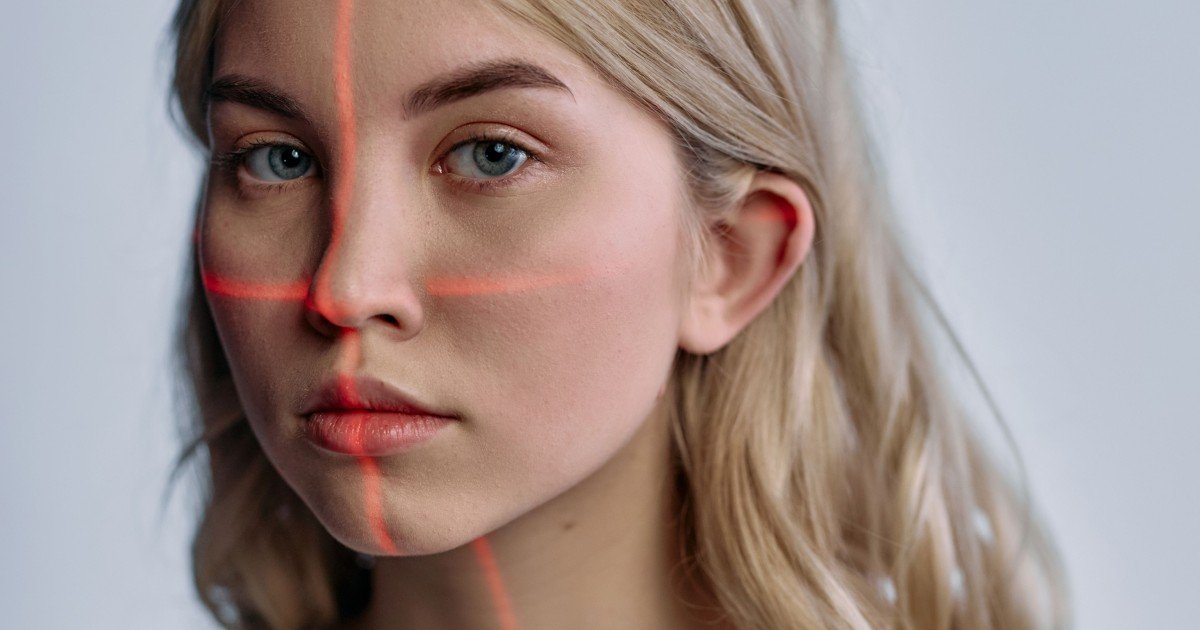
Imagine walking up to a device and having it recognize you without typing a password, showing an ID card, or saying your name. It seems almost effortless, but the answer to how does facial recognition technology identify a person involves several sophisticated steps involving cameras, computer vision, biometric measurements, machine learning, and statistical matching. A facial recognition system does not simply “look at your face” and know who you are. It captures visual information, detects a face, extracts distinctive features, converts those features into a mathematical representation, and compares that representation with stored reference data.
That distinction is important because facial recognition is often described as if a computer sees a face in the same way a human does. It does not. A computer processes patterns and numerical representations derived from an image or video frame.
The technology has become part of many modern digital systems, from device authentication and identity verification to access control, border processing, security applications, and photo organization. At the same time, it raises important questions about accuracy, privacy, consent, bias, data protection, and appropriate use.
Understanding what happens between the camera and the final identification makes the technology much easier to evaluate.
What Is Facial Recognition Technology?
Facial recognition is a biometric technology that uses characteristics of a person’s face to determine whether a facial image corresponds to a particular identity.
The word biometric matters here. Biometrics refers to using measurable characteristics associated with a person for recognition or verification. Facial recognition is one biometric approach, alongside technologies such as fingerprint, iris, and voice recognition.
A typical facial recognition workflow can be simplified into these stages:
Capture → Face Detection → Face Alignment → Feature Extraction → Face Representation → Comparison → Decision
Each stage has a different purpose.
A camera captures an image. Software finds a face within that image. The system may normalize the face’s position and orientation. A machine-learning model then extracts useful visual characteristics and converts them into a numerical representation, often called a facial embedding. Finally, that representation is compared with one or more stored representations.
The result is not necessarily a statement of absolute certainty.
Instead, the system usually produces a similarity score or another statistical measure, which is evaluated against a chosen threshold.
That is one of the most important ideas for understanding modern facial recognition: recognition is generally a matching problem, not a magical identification process.
How Does Facial Recognition Technology Identify a Person?
At a high level, facial recognition identifies a person by comparing a mathematical representation of their face with previously enrolled facial representations.
Suppose you enroll in a facial authentication system.
During enrollment, the system captures your face and processes it into a reference representation. Later, when you attempt to authenticate, the system captures another image of your face and creates a new representation.
The system then asks:
How similar is the new representation to the enrolled representation?
If the similarity meets the system’s acceptance criteria, the system may accept the match.
This process becomes more complicated when the system is searching among many possible identities.
Verification and Identification Are Different
Two terms are often mixed together: facial verification and facial identification.
Facial verification is essentially a one-to-one question:
“Are you the person you claim to be?”
For example, a user may first provide an account identifier and then use their face as an additional authentication factor.
Facial identification is a one-to-many question:
“Which person in this collection, if any, does this face correspond to?”
The system compares the captured face against multiple enrolled identities.
This difference has major technical and operational consequences. A one-to-one verification system and a large-scale identification system may use similar underlying concepts but operate under very different conditions.
Step 1: Capturing the Face
Everything begins with an image.
A camera captures visible information about the person’s face. Depending on the application, the system might use an ordinary RGB camera, an infrared sensor, depth information, or multiple sensing technologies.
The quality of this initial capture matters.
Factors such as lighting, camera angle, distance, motion, facial expression, image resolution, and occlusion can affect the information available to the recognition system.
For example, sunglasses may hide parts of the face. A strong backlight can reduce useful facial detail. A rapidly moving subject can produce blur.
Modern systems are designed to tolerate some of these conditions, but no recognition system has unlimited ability to compensate for poor input.
This leads to a practical principle:
Better input generally gives the recognition model more useful information to work with.
The camera does not need to produce a perfect photograph, but it needs enough relevant visual information for subsequent processing.
Step 2: Detecting a Face
The system first needs to determine whether a face is present.
This is known as face detection, and it is different from facial recognition.
Face detection answers:
“Where is the face?”
Facial recognition asks:
“Whose face is this, or does it match the claimed identity?”
A detection model may examine an image and identify a rectangular region containing a face.
In a group photograph, the detector may identify several separate faces.
This stage is essential because recognition models need to know which portion of the image contains the facial information they should analyze.
Modern computer vision models can detect faces under many different conditions, but detection itself does not prove identity.
Finding a face is not the same as recognizing a person.
For readers interested in what happens at the broader computing level when software receives an instruction and processes it, our guide on what happens inside a computer when you open an application provides useful background on the relationship between software instructions and underlying computer operations.
Step 3: Aligning and Normalizing the Face
Once a face has been detected, the system may normalize it before extracting recognition features.
Why?
Because the same person’s face can appear dramatically different depending on how it is positioned.
A person looking directly at the camera creates one image. The same person turning their head slightly creates another. Changes in camera distance, scale, and orientation also alter the raw pixel arrangement.
Face alignment attempts to establish a more consistent representation.
The system may identify facial landmarks such as:
- Eyes
- Nose
- Mouth
- Facial boundaries
- Other characteristic points
These landmarks can help the system estimate the face’s position and orientation.
The resulting face image can then be transformed into a more standardized format.
This does not mean the system literally needs to make every face identical. Instead, normalization reduces some irrelevant variation so that the recognition model can focus more effectively on meaningful facial characteristics.
Step 4: Extracting Facial Features
This is where modern machine learning becomes particularly important.
Older facial recognition approaches often relied heavily on manually designed measurements and mathematical descriptions of facial structure.
Modern systems frequently use deep neural networks trained on large collections of facial images.
Rather than programmers specifying every facial characteristic the system should measure, the model learns useful representations during training.
The model receives facial images and learns patterns that help distinguish one identity from another.
These patterns may relate to many aspects of facial appearance and structure.
It is important not to imagine the system simply creating a checklist such as:
“Eyes this wide, nose this long, mouth this shape.”
Modern recognition models are generally more complex.
They transform the image through multiple layers of learned mathematical operations and ultimately produce a compact numerical representation.
That representation is often called an embedding.
What Is a Facial Embedding?
A facial embedding is a numerical representation of facial information produced by a recognition model.
Instead of storing a face as nothing more than a photograph, the system can represent it as a point or vector in a mathematical space.
The exact structure depends on the model.
The useful idea is that faces with similar learned characteristics may be positioned closer together in that representation space, while less similar faces may be farther apart.
For example, imagine each face representation as a point on an enormous mathematical map.
Two images of the same person under different conditions might ideally produce representations that remain relatively close.
Representations belonging to different people should ideally be distinguishable.
The system can then calculate a similarity or distance measure between two representations.
This is one of the core mechanisms behind modern facial recognition.
Step 5: Comparing the Face With Stored Data
Once a new facial representation has been generated, the system needs something to compare it against.
That reference may come from an enrollment process.
During enrollment, a person may provide one or more facial images. The system processes those images and stores a representation or representations associated with the person’s account or identity.
Later, a new facial sample is processed.
The system compares the new representation with the stored reference.
A simplified example might look like this:
Stored reference → [facial representation]
New scan → [new facial representation]
Comparison → similarity score
The score is then interpreted according to the application’s rules.
If the similarity is sufficiently high, the system may accept the match.
If it falls below the relevant threshold, the system may reject it or request another form of verification.
This is why facial recognition should not usually be described as simply saying “yes” or “no” based on whether two faces look alike.
The underlying process is statistical and computational.
Step 6: Applying a Matching Threshold
A recognition system needs a decision rule.
Suppose the system produces a similarity score for two facial representations.
A threshold can be established:
Above threshold → accept
Below threshold → reject
The actual mathematics can vary substantially between systems and models, so there is no universal facial-recognition score that applies to every technology.
The threshold is an important security and usability parameter.
If the system is too permissive, it may accept incorrect matches.
If it is too strict, it may reject legitimate users.
This creates a fundamental trade-off between different types of errors.
False Match
A false match occurs when the system incorrectly treats two different people as the same person.
This is particularly important in identification systems, where the consequences of an incorrect match can be significant.
False Non-Match
A false non-match occurs when the system fails to match a person with their legitimate enrolled identity.
For example, a user might be correctly enrolled but fail authentication because the new image is significantly different from the enrollment conditions.
The balance between these errors depends on the application.
A device-unlock system may have different requirements from a high-security identity verification system.
What Makes One Face Different From Another?
Human faces contain a large amount of visual variation.
Recognition systems can learn representations from characteristics related to facial structure and appearance, but it is misleading to reduce this to a small list of universal measurements.
Factors that can contribute to distinguishability include:
- Relative arrangement of facial landmarks
- Overall facial geometry
- Shape and proportions
- Texture-related visual information
- Features around the eyes, nose, and mouth
- Three-dimensional structure, where depth information is available
- Other learned patterns within the image
Modern neural networks can combine many subtle signals that would be difficult to describe individually.
That is one reason deep learning has had such a significant impact on computer vision.
Instead of requiring humans to decide every feature that matters, the model can learn representations from training data.
The Role of Artificial Intelligence and Machine Learning
Facial recognition is closely connected to artificial intelligence, but the phrase “AI recognizes your face” hides a lot of technical detail.
A recognition system typically involves several specialized components.
Machine learning can be used to:
- Detect faces
- Locate facial landmarks
- Generate facial embeddings
- Compare representations
- Improve robustness to image variation
- Identify patterns across large datasets
Deep learning, particularly neural-network architectures designed for visual processing, has become central to many modern recognition systems.
Training and inference are also different.
Training
During training, a model learns from examples.
The system adjusts internal parameters so that its representations become useful for the intended recognition task.
This process can require substantial computational resources.
Inference
Once the model has been trained, it can process a new image.
This is called inference.
During inference, the system applies the learned model to the new facial image and generates the representation used for comparison.
In other words:
Training teaches the model how to represent faces.
Inference uses that learned capability on a new face.
Understanding this distinction helps explain why the recognition process on your device can happen quickly even though creating and training sophisticated models may require significant computing resources.
Does Facial Recognition Store Your Face?
This question deserves a careful answer because “face data” can refer to several different things.
A system may store:
- Original facial photographs
- Video frames
- Facial templates
- Numerical embeddings
- Account identifiers
- Metadata
- Verification records
The exact implementation depends on the system.
Some technologies can perform significant processing locally, while others may send information to remote servers.
A facial embedding is not simply a normal photograph, but it is still sensitive biometric information because it is derived from a person’s physical characteristics.
That means users and organizations should pay attention to how facial data is collected, processed, stored, protected, retained, and deleted.
The security of a facial recognition system is not determined solely by the accuracy of its AI model.
Data governance matters too.
Local Facial Recognition vs Cloud-Based Recognition
Facial recognition can be implemented in different ways.
On-Device Processing
With on-device processing, the device performs some or all of the recognition process locally.
Potential advantages can include reduced dependence on network connectivity and less need to transmit facial information to a remote server.
The exact privacy and security properties depend on the implementation.
Cloud-Based Processing
In a cloud-based architecture, some processing may occur on remote infrastructure.
A device can capture the image and transmit relevant data to a server, where a recognition model performs processing.
This architecture can provide access to substantial computing resources, but it introduces additional considerations around transmission, storage, access control, and data governance.
The important question is not simply whether a system uses AI.
It is where the biometric processing occurs and what happens to the resulting data.
For broader context on how devices communicate with online services and what happens between your device and a website, our guide on how the internet actually works from your device to a website provides a useful foundation.
Why Facial Recognition Sometimes Fails
Even advanced recognition systems can make mistakes.
A face can change significantly between enrollment and authentication.
Factors include:
- Lighting
- Head pose
- Camera quality
- Facial expression
- Aging
- Hair changes
- Glasses
- Masks or other coverings
- Motion blur
- Low image resolution
- Partial occlusion
- Differences between cameras
The model does not see a person’s identity directly. It receives visual evidence and estimates whether that evidence corresponds sufficiently to a stored representation.
This is why real-world testing matters.
A model that performs extremely well under controlled conditions may behave differently in environments with poor lighting, unusual camera angles, diverse populations, or unpredictable movement.
Bias and Fairness in Facial Recognition
Facial recognition also raises important questions about fairness.
Machine-learning systems learn from training data. If the training data does not adequately represent the population in which the system will be deployed, performance can vary between demographic groups.
This does not mean every system has the same level or type of disparity.
It means evaluation must be based on evidence from the actual system, population, environment, and use case.
Organizations deploying facial recognition should therefore consider:
- How the system was evaluated
- Which populations were included
- What error rates were observed
- Whether testing reflects real-world conditions
- What happens when the system is uncertain
- Whether human review is available when appropriate
The stakes are particularly high when recognition is used for consequential decisions.
A system should not be treated as infallible simply because it uses advanced AI.
Facial Recognition vs Face Detection
These technologies are related but not identical.
Face detection: Finds faces in an image.
Face verification: Determines whether a face matches a claimed identity.
Face identification: Searches a collection of identities to determine which one, if any, matches.
Face analysis: May estimate attributes or characteristics from an image, depending on the application.
Keeping these concepts separate prevents a lot of confusion.
A camera that can detect a face is not automatically capable of identifying the person.
Where Is Facial Recognition Used?
Facial recognition can appear in a wide range of applications.
Device Authentication
A device can use facial biometrics as part of an authentication process.
The goal is usually to determine whether the person attempting to unlock or access the device corresponds to an enrolled user.
Identity Verification
Online services may use facial comparison as part of identity verification workflows.
For example, a system may compare a live or captured face against an identity document image or another trusted reference.
The exact process varies by provider and jurisdiction.
Access Control
Organizations can use facial recognition to control access to restricted areas or systems.
In such environments, reliability, security, and appropriate data handling become particularly important.
Border and Travel Systems
Automated identity technologies can assist with certain travel and border-processing workflows.
These applications may involve large-scale matching and therefore have different technical and governance requirements from personal device authentication.
Photo Organization
Some photo applications can group images based on recurring faces.
This is not necessarily the same as identifying a person by their legal identity.
The system may simply recognize that multiple images appear to contain the same face.
That distinction is subtle but important.
How Is Facial Recognition Different From a Password?
A password is something you know.
A facial biometric is something associated with who you are.
This difference has major security implications.
A password can be changed relatively easily after compromise.
A person’s face cannot simply be replaced.
That is why biometric systems require careful protection.
Biometrics can be convenient because users do not have to remember a complex secret, but convenience does not eliminate the need for security controls.
In many applications, biometrics are best understood as one component of a broader authentication system rather than a universal replacement for every other security mechanism.
What Happens If the System Cannot Recognize You?
A well-designed system should have a fallback process.
Depending on the application, this might involve:
- Trying again under better conditions
- Using another biometric method
- Entering a PIN or password
- Performing additional identity verification
- Requesting human assistance
The fallback process matters because recognition systems operate with uncertainty.
Treating every failed match as proof that the person is unauthorized would create unnecessary problems.
Likewise, treating every successful match as absolute proof of identity can create security risks.
Good system design acknowledges both possibilities.
The Future of Facial Recognition in 2026
Facial recognition continues to develop alongside broader advances in computer vision, machine learning, edge computing, and multimodal AI.
Several trends are especially relevant.
More Processing at the Edge
As devices become more capable, more AI inference can potentially happen locally.
This can reduce latency and may reduce the need to transmit raw images, depending on the system architecture.
Better Handling of Difficult Conditions
Modern models continue to improve their ability to operate across changes in pose, lighting, image quality, and other real-world conditions.
However, improvement does not mean perfection.
Stronger Liveness and Anti-Spoofing Techniques
A recognition system may need to determine whether it is seeing a real person rather than a photograph, video, or other presentation artifact.
This is known as presentation attack detection or liveness-related protection, depending on the implementation.
These safeguards can be especially important for remote identity verification and authentication.
Greater Attention to Privacy
As biometric technologies become more widespread, privacy-preserving architectures, data minimization, access controls, transparency, and regulatory compliance are becoming increasingly important.
The future of facial recognition will therefore not be determined solely by whether algorithms become more accurate.
It will also depend on whether organizations use them responsibly.
How to Use Facial Recognition Responsibly
For users, a few practical habits can make a meaningful difference.
Before using a facial recognition service, consider:
- What is the technology being used for?
- Is facial recognition necessary for the task?
- Where is your facial data processed?
- Is data stored, and for how long?
- Who can access it?
- Can you use an alternative authentication method?
- What happens if recognition fails?
- What privacy information does the provider give you?
For organizations, responsible deployment should involve appropriate security controls, testing, documentation, access management, retention policies, and clear communication with users.
Accuracy should not be the only evaluation criterion.
A technically impressive model can still be part of a poorly designed system.
Frequently Asked Questions
How does facial recognition technology identify a person?
It captures an image of a face, detects and aligns the face, converts facial information into a mathematical representation such as an embedding, and compares that representation with stored reference data. A similarity measure and decision threshold are then used to determine whether the system should accept a match.
Does facial recognition identify a person by measuring their facial features?
Modern systems generally do more than measure a few manually selected features. Deep-learning models can learn complex visual representations from facial images and convert those patterns into numerical embeddings that can be compared.
What is a facial embedding?
A facial embedding is a numerical representation generated by a recognition model from a facial image. It allows the system to compare facial representations mathematically rather than relying on direct visual comparison of photographs.
What is the difference between face detection and facial recognition?
Face detection determines where a face appears in an image. Facial recognition goes further by comparing the detected face with reference data to determine whether it matches a known identity.
Can facial recognition work with a photo?
The answer depends on the system. A basic recognition system may be susceptible to presentation attacks, while modern authentication systems can use additional techniques designed to detect whether the presented face comes from a live person rather than a static image.
Does facial recognition require the internet?
Not always. Some systems can perform processing locally on a device. Others depend partly or entirely on remote servers. Whether an internet connection is necessary depends on the architecture.
Is facial recognition 100% accurate?
No biometric recognition technology should be treated as universally perfect. Performance depends on the model, data, environment, image quality, threshold, population, and application. Real-world testing is essential.
Can facial recognition work when someone is wearing glasses?
It can, depending on the system and the type of glasses. Recognition performance may be affected when important facial regions are obscured or when the appearance differs substantially from enrollment conditions.
Can facial recognition recognize someone as they age?
Some systems are designed to handle changes in appearance over time, but aging can still affect recognition performance. The degree of impact depends on the technology, age difference, image quality, and training and evaluation conditions.
Is facial recognition safe for privacy?
Privacy depends heavily on how the technology is implemented. Important considerations include what data is collected, whether images or templates are stored, where processing occurs, how long information is retained, who can access it, and whether users have meaningful choices.
Can facial recognition be fooled?
Some recognition systems can be vulnerable to presentation attacks or manipulated inputs. Modern systems can incorporate anti-spoofing and liveness-related protections, but security depends on the complete implementation rather than the recognition model alone.
What is the difference between facial recognition and facial verification?
Facial verification is generally a one-to-one comparison asking whether a person matches a claimed identity. Facial identification is typically a one-to-many search asking which identity, if any, corresponds to the captured face.
Facial Recognition Is Mathematical Matching, Not Machine Intuition
The answer to how does facial recognition technology identify a person becomes much clearer when you look beyond the camera.
The camera only captures the starting information. The real recognition process happens through a chain of computer-vision and machine-learning operations: detecting the face, normalizing its position, extracting useful patterns, generating a mathematical representation, comparing that representation with reference data, and applying a decision threshold.
In modern systems, the central idea is not that a computer somehow “understands” a person’s face in the human sense.
It evaluates patterns.
A successful system learns representations that make different identities distinguishable while allowing variations in the same person’s appearance to remain sufficiently similar for matching.
At the same time, accuracy is only one part of the story. Privacy, security, fairness, transparency, liveness detection, data retention, and appropriate use all matter when biometric technology is deployed in the real world.
As facial recognition continues evolving in 2026, the most useful question is no longer simply whether a machine can recognize a face.
It is whether the entire system can do so reliably, securely, transparently, and responsibly for the specific situation in which it is being used.
Informational Disclaimer: This article is intended for general educational purposes and does not constitute legal, security, biometric, or professional advice. Facial recognition capabilities, accuracy, privacy practices, and applicable requirements vary by technology, provider, jurisdiction, and use case. Always review the relevant documentation and privacy information before relying on a biometric system for important decisions.




Leave a Reply